A Meditation Inspired by Richard Rohr’s Reflection on Paul
By Katie Rea — spiritual director, writer, and companion for those listening deeply to life as it
I’m not always the biggest fan of the apostle Paul. Especially when people use his writings to silence me. Such as in 1 Corinthians 14:34-35:” Women should be silent in the churches.”
The issue isn’t Paul so much as what people do with his words. His writing gets taken up as a tool for spiritual misuse, even weaponized to justify harm he never intended.
Richard Rohr reminds us how Paul’s writings can feel so misunderstood. We often quote him to try to “reinforce structure, certainty, or control.” There’s so much in life that we can’t control, so disorder feels chaotic and scary.
But Paul was describing transformation, a transformation he experienced firsthand by coming face to face with Jesus. The grace and love that Jesus taught became the good news he was so eager to share. He was concerned with awakening people to Love. And Love, as we know, rarely works through neatness. It works through the very disorder we try so hard to avoid.
Rohr reminds us that the apostle Paul was a man who lived with paradox. A law-abiding Roman learning of the grace-filled lessons of God. His letters are threaded with contrasts: law and grace, flesh and Spirit, the old self and the new.
He wasn’t perfect, yet when does God ever seek perfection? God’s perfection is made within our weakness.
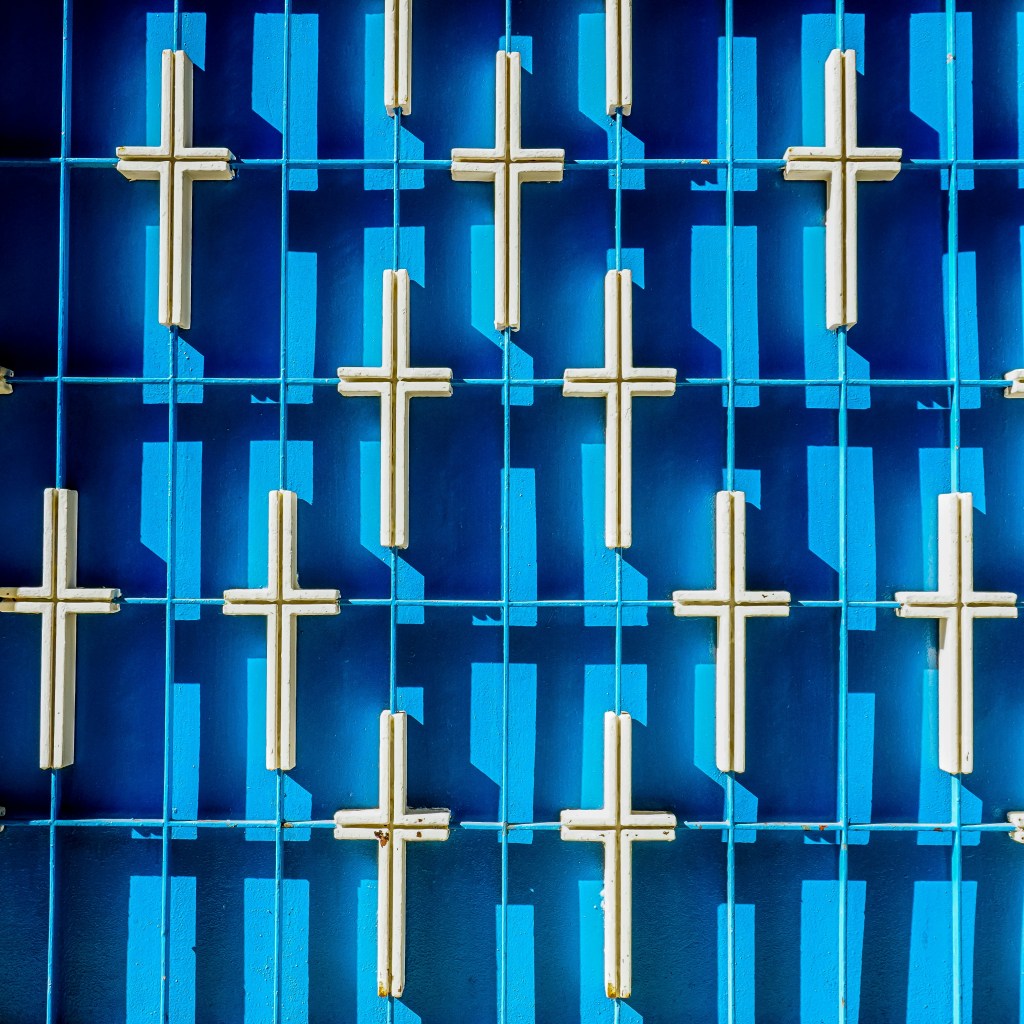
What strikes me most is how Paul came to trust the language of the cross as the pattern through which reality reveals itself. Not as punishment. Not as doctrine. But as the place where opposites meet and are held.
The cross became his lens for seeing the world: weakness becoming strength, foolishness becoming wisdom, death giving way to life. It was the coincidence of opposites that opened him to what he called the “hidden wisdom of God.”
And isn’t that how transformation often arrives? Not through perfect order or tidy answers, but through the “ego‑stripping moments that peel away our false selves” and usher us into something truer. I’d prefer tidy answers, sure, as the ego-stripping moments can often feel like a punch in the gut, but this is a path to the authentic self.
Paul’s life became a living testimony that reconciliation happens from the inside out.
This is the good news we keep missing from the apostle Paul: God transforms us. Jesus does not wait for our contradictions to resolve before drawing near. We are loved despite all of our imperfections and mistakes, though God may take us on a new path.
And am I thankful for this!
So today, I’m sitting with my own contradictions. All the places where I feel anxious, yet faith filled, weary yet hopeful, tender and yet with strength.
I’m trusting, like Paul, these tensions might be the very doorway through which a Larger Love is trying to reach me.
Paul wasn’t the abuser. The harm begins when we stop reading Paul as a whole—when his voice is fragmented, lifted out of context, and turned into a tool for spiritual control rather than transformation.
A difficult prayer I would gently encourage: “May we allow disorder to become a teacher rather than a threat. May we discover, again and again, that the contradictions within us are not obstacles to God but openings. Help us to open our hearts to discern.”
Based on Richard Rohr’s CAC meditations: A Man Who Lived and Loved Paradox — Center for Action and Contemplation
A newsletter by Katie Rea



Leave a comment